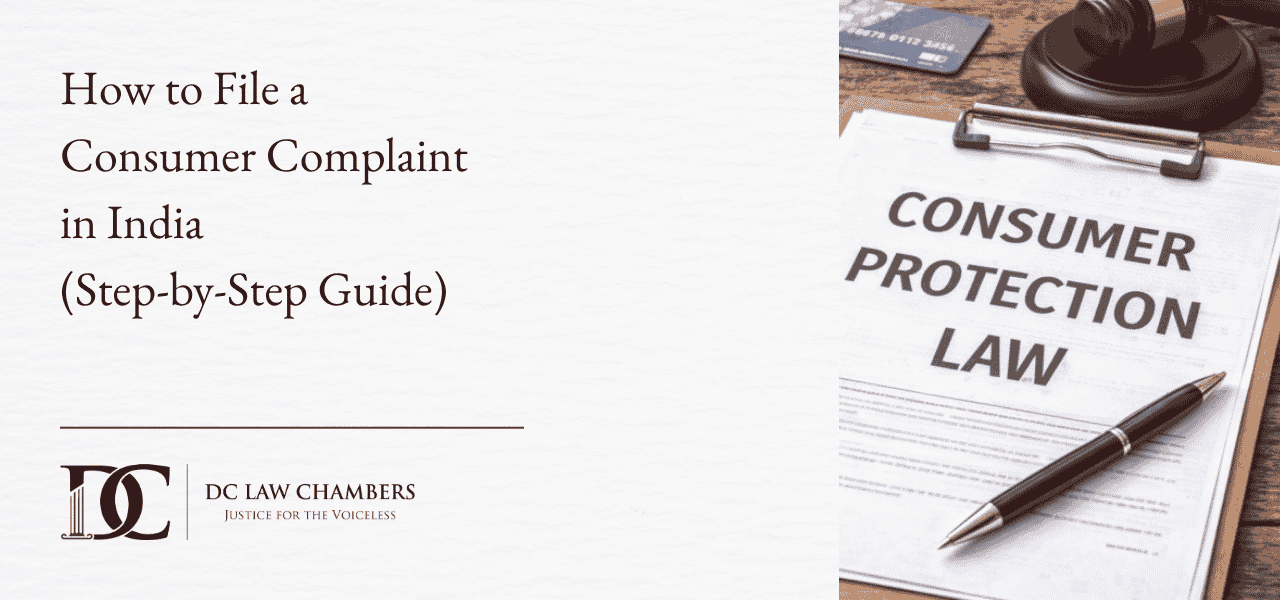
When you buy a product or pay for a service, you expect to receive what was promised. A faulty appliance, delayed possession of property, rejected insurance claim, poor banking service, or misleading advertisement can leave consumers frustrated and, in many cases, out of pocket. Fortunately, Indian law provides a structured mechanism to address such grievances.
The Consumer Protection Act, 2019 was introduced to strengthen consumer rights and make dispute resolution faster and more accessible. Along with traditional filing before Consumer Commissions, consumers can now file complaints online through the e-Daakhil portal, making the process simpler than ever before.
Whether you are an individual consumer or a business seeking redress for services hired, understanding the complaint process can help you enforce your legal rights effectively. This guide explains each step involved in filing a consumer complaint in India.
Who Can File a Consumer Complaint?
The Consumer Protection Act, 2019 allows several categories of persons to approach the Consumer Commission. These include:
- Individual consumers.
- Groups of consumers with the same interest.
- Recognised consumer associations.
- The Central or State Government.
- The legal representative or heir of a deceased consumer, where applicable.
In most situations, a consumer is someone who purchases goods or hires services for consideration. However, purchases made exclusively for resale or certain commercial purposes may fall outside the scope of the Act, subject to the exceptions recognised under law.
What Types of Consumer Disputes Can Be Filed?
Consumer Commissions deal with a wide variety of disputes arising from the sale of goods and provision of services. These commonly include defective products, deficiency in services, unfair trade practices, misleading advertisements, overcharging, product liability claims, and the sale of hazardous goods.
Disputes involving e-commerce platforms, banking services, insurance companies, hospitals, builders, travel agencies, educational institutions, and manufacturers frequently come before Consumer Commissions. The key question is whether the consumer has suffered because the goods or services failed to meet the standards promised or required under law.
Step 1: Collect All Relevant Documents
Before initiating any legal proceedings, gather every document connected with the transaction. Proper documentation forms the foundation of a successful consumer complaint and helps establish the facts before the Commission.
Some of the important documents include:
- Purchase invoices or receipts.
- Warranty or guarantee cards.
- Emails, messages, or written correspondence.
- Payment records.
- Photographs or videos of defective goods.
- Service reports or repair records.
- Screenshots of online transactions, where relevant.
Keeping these documents organised from the outset can save considerable time once the complaint is filed.
Step 2: Attempt to Resolve the Matter First
Although the Consumer Protection Act does not make it mandatory to send a legal notice before filing a complaint, it is generally advisable to first approach the seller or service provider directly.
Many disputes can be resolved through written communication without requiring formal litigation. Sending an email or written notice explaining the grievance, the relief sought, and a reasonable timeline for resolution demonstrates that you made a genuine effort to settle the dispute. If the business refuses to cooperate or ignores the complaint, this correspondence may also serve as useful evidence before the Consumer Commission.
Step 3: Identify the Appropriate Consumer Commission
The next step is determining where the complaint should be filed. Consumer disputes are heard by the District, State, or National Consumer Disputes Redressal Commissions established under the Consumer Protection Act, 2019.
The appropriate forum depends primarily on the value of the claim and the applicable jurisdiction. Territorial jurisdiction generally depends on factors such as where the opposite party resides or carries on business, where the cause of action arose, or where the complainant resides or personally works for gain, as provided under the Act.
Since jurisdictional rules may change through legislative amendments or judicial decisions, it is important to confirm the applicable provisions before filing the complaint.
Step 4: Prepare a Well-Drafted Complaint
A consumer complaint does not need to contain complicated legal language, but it should present the facts in a clear and logical manner.
The complaint should identify both parties, explain the sequence of events leading to the dispute, describe how the goods were defective or how the services were deficient, and specify the relief being sought. Every factual statement should, as far as possible, be supported by documentary evidence.
A complaint that is organised, factual, and supported by records is generally easier for the Commission to examine than one containing vague allegations or emotional assertions.
Step 5: File the Complaint
Once the complaint has been prepared, it may be filed before the appropriate Consumer Commission either physically or through the e-Daakhil portal, wherever the online facility is available.
The e-Daakhil platform has significantly simplified consumer litigation by allowing complaints to be submitted electronically, supporting documents to be uploaded online, prescribed fees to be paid digitally, and case status to be tracked without repeated visits to the Commission. This has made the dispute resolution process more accessible, particularly for consumers who may not be located near the Commission or who prefer handling proceedings electronically.
Step 6: Pay the Applicable Filing Fee
Every consumer complaint must be accompanied by the prescribed statutory fee. The amount depends upon the value of the claim and the applicable rules in force.
Compared to ordinary civil litigation, filing fees before Consumer Commissions are relatively modest, making consumer remedies more affordable for individuals as well as small businesses. Paying the correct fee at the time of filing helps avoid unnecessary procedural delays.
Step 7: Attend the Proceedings
After the complaint is admitted, the Consumer Commission issues notice to the opposite party and provides an opportunity to file its response. Both sides are then given an opportunity to present their case along with the supporting evidence.
Depending on the nature of the dispute, the Commission may examine documents, hear oral submissions, obtain expert opinions, or direct testing of goods where necessary. In appropriate cases, the matter may also be referred to mediation if both parties are willing to explore an amicable settlement. If mediation succeeds, the settlement becomes binding. If it does not, the complaint proceeds before the Commission until a final decision is delivered.
What Relief Can the Consumer Commission Grant?
The relief granted depends on the facts of each case and the evidence placed before the Commission. Depending on the circumstances, the Commission may direct:
- Replacement or repair of defective goods.
- Refund of the purchase price.
- Removal of deficiencies in services.
- Compensation for financial loss or mental agony, where justified.
- Discontinuation of unfair trade practices.
- Withdrawal of hazardous goods from sale.
- Payment of litigation costs.
- Product liability compensation in appropriate cases.
The objective is to place the consumer, as far as possible, in the position they would have been in had the wrongful conduct not occurred.
Common Mistakes to Avoid
One of the most common reasons consumer complaints face delays or dismissal is inadequate preparation. Consumers sometimes file complaints without preserving invoices or payment records, making it difficult to establish the transaction itself. Others approach the wrong Consumer Commission or wait until the limitation period has expired before initiating proceedings.
It is equally important to avoid making exaggerated claims that cannot be supported by evidence. Consumer Commissions primarily decide cases on the basis of documents and established facts. A complaint that is concise, accurate, and supported by reliable records is generally far more effective than one filled with broad allegations.
Conclusion
The Consumer Protection Act, 2019 has made consumer dispute resolution more efficient by introducing clearer procedures, recognising mediation, and enabling online filing through the e-Daakhil portal. Consumers today have easier access to legal remedies than ever before, provided they understand the process and comply with the procedural requirements.
Filing a consumer complaint is not simply about completing a form. It involves identifying the correct forum, presenting the facts clearly, preserving relevant evidence, and seeking relief that is supported by law. Whether the dispute concerns defective goods, deficient services, or unfair trade practices, a well-prepared complaint can go a long way in ensuring that consumer rights are effectively protected.