Introduction: Understanding the Flow After an FIR
To understand what happens after an FIR is filed, it is useful to see the process as a continuous legal flow rather than isolated steps. Each stage connects to the next, beginning with registration and moving through investigation, court proceedings, and finally judgment and appeal. This structured progression ensures that both the rights of the accused and the interests of justice are balanced through due process.
Registration of FIR: The Formal Beginning
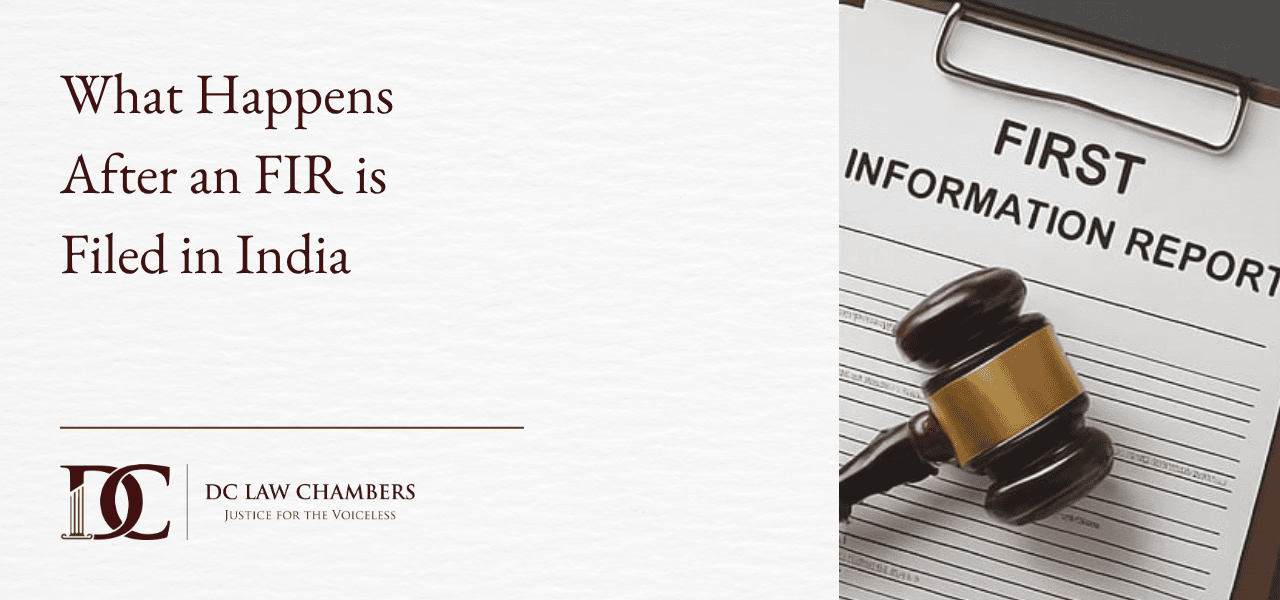
The process begins with the registration of the FIR under Section 154 of the Code of Criminal Procedure, 1973. At this stage, the complaint is formally recorded by the police, assigned a unique number, and a copy is provided to the informant free of cost. This marks the point at which the matter moves from being a private grievance to a State-led legal action. Once registered, the police are legally obligated to proceed with the case and cannot ignore the complaint.
Commencement of Investigation: The Fact-Finding Stage
Following registration, the police initiate investigation under Section 156 CrPC. This is the foundation of the entire criminal case. The police begin gathering evidence, visiting the scene of the incident, identifying witnesses, and documenting facts. The purpose of this stage is not to establish guilt but to determine whether an offence has occurred and who may be responsible. Investigation often involves parallel actions such as collecting documents, analysing digital data, and preserving physical evidence.
Decision on Arrest: A Conditional Step
During the investigation, the police assess whether arrest is necessary. Arrest is not automatic upon registration of an FIR. It depends on factors such as the seriousness of the offence, the likelihood of the accused absconding, or the possibility of tampering with evidence or influencing witnesses. If arrest is made, the accused must be informed of the grounds, produced before a magistrate within 24 hours, and given the right to legal representation. If arrest is not required, the investigation continues, and the accused may still be called for questioning.
Recording of Statements and Collection of Evidence
As the investigation progresses, statements of witnesses and involved parties are recorded. Under Section 161 CrPC, police record statements which are not signed and are mainly used for corroboration during trial. Under Section 164 CrPC, statements are recorded before a magistrate and carry higher evidentiary value, often including confessions or crucial testimonies. Alongside this, documentary, digital, and physical evidence is collected and analysed to build the case.
Medical and Forensic Examination: Scientific Support
In cases involving physical harm, sexual offences, or suspicious deaths, medical and forensic examination becomes essential. This may include injury reports, DNA analysis, fingerprint examination, cyber forensic analysis, or post-mortem reports. These scientific elements provide objective support to the investigation and often play a decisive role during trial.
Filing of Charge Sheet or Closure Report: Outcome of Investigation
Once the investigation is complete, the police submit their findings before the magistrate under Section 173 CrPC. At this stage, the process branches into two outcomes. If sufficient evidence is found, a charge sheet is filed, indicating that the case should proceed to trial. If evidence is insufficient, a closure report is filed. However, a closure report does not necessarily end the matter, as the complainant has the right to challenge it by filing a protest petition before the court.
Cognisance by Magistrate: Beginning of Judicial Process
After receiving the police report, the magistrate examines it under Section 190 CrPC. The court decides whether to take cognisance of the offence. If satisfied with the material, the court formally acknowledges the case and initiates judicial proceedings. This marks the transition from investigation to court adjudication.
Issuance of Process: Summons or Warrant
Once cognisance is taken, the court issues process against the accused. Depending on the seriousness of the offence, this may be in the form of a summons or a warrant. This ensures the presence of the accused before the court and allows the proceedings to move forward.
Bail Proceedings: Balancing Liberty and Justice
At this stage, the accused may seek bail under Sections 437, 439, or 438 CrPC. The court evaluates factors such as the nature and gravity of the offence, the possibility of the accused fleeing, and the risk of influencing witnesses. Bail allows the accused to remain free during the trial, subject to conditions, and does not amount to an acquittal.
Framing of Charges: Defining the Scope of Trial
After the accused appears before the court, the judge examines the material on record and frames charges if sufficient grounds exist. This step clearly defines the accusations against the accused and sets the scope of the trial. The accused must then respond by either pleading guilty or contesting the charges, which leads to a full trial.
Trial Stage: Core Adjudication Process
The trial is the most detailed and time-intensive stage. It begins with the prosecution presenting its evidence and examining witnesses. This is followed by cross-examination by the defence. The accused is then given an opportunity to explain circumstances under Section 313 CrPC. The defence may also present its own evidence. The court carefully evaluates all materials before reaching a conclusion.
Judgment: Final Decision at Trial Stage
After completion of arguments, the court delivers its judgment. If the prosecution successfully proves its case, the accused is convicted and sentencing follows. If the evidence is insufficient, the accused is acquitted. This stage determines the outcome of the case at the trial level.
Appeal: Continuation of Legal Remedy
Even after judgment, the legal process may continue. The aggrieved party has the right to file an appeal before a higher court such as the Sessions Court or High Court. The appellate court re-examines the case, including evidence, legal findings, and procedural aspects, providing an additional layer of judicial scrutiny.
Conclusion: A Structured but Layered Process
Viewed as a whole, the journey after an FIR follows a structured progression from registration to investigation, from judicial proceedings to final judgment, and potentially to appeal. Each stage serves a distinct purpose in ensuring fairness, accountability, and due process. While the process may appear lengthy, it is designed to prevent misuse and ensure that justice is delivered after careful examination. Understanding this flow helps individuals approach the system with clarity, preparedness, and realistic expectations.