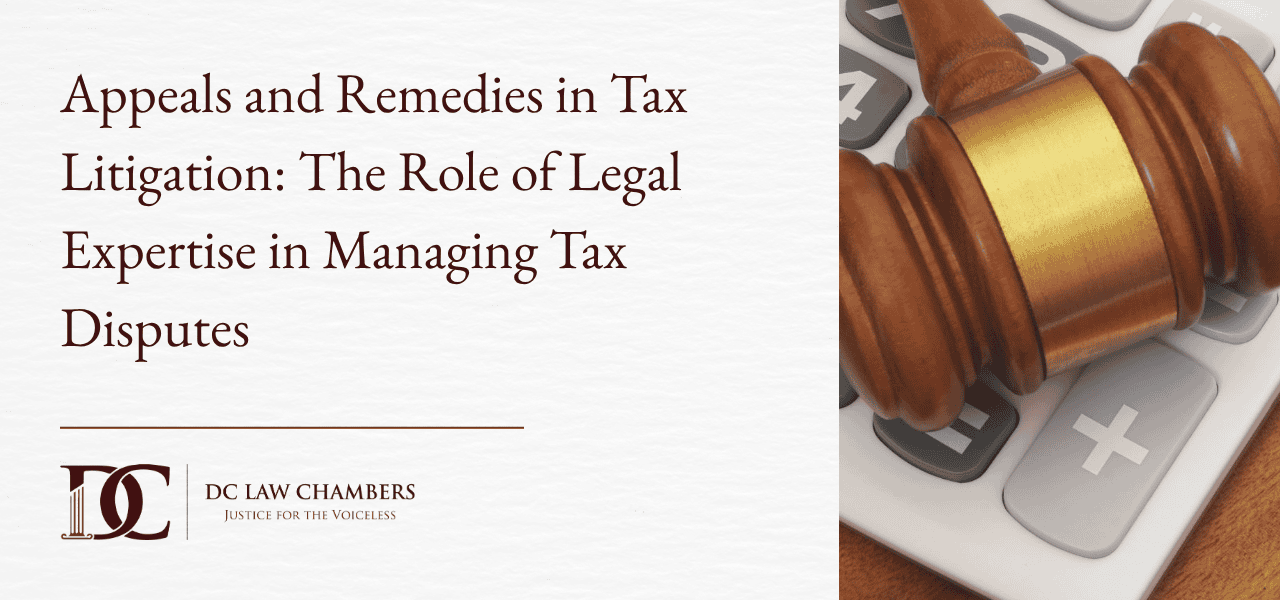
Tax laws are complex and constantly evolving, making compliance and interpretation challenging for individuals and businesses alike. Disputes with tax authorities can arise due to assessments, penalties, or differing interpretations of law. Understanding the available appeals and remedies, the role of a tax lawyer, recent changes in tax laws, and the importance of proper legal advice is essential to effectively managing tax litigation and avoiding unnecessary legal consequences.
Understanding Tax Litigation and Available Remedies
Tax litigation arises when a taxpayer disagrees with decisions made by tax authorities, such as tax assessments, demands, penalties, or prosecution proceedings. Tax laws provide a structured mechanism for appeals and remedies to ensure fairness and accountability in the taxation process.
Typically, a taxpayer can challenge an adverse order by filing an appeal before the appropriate appellate authority within the prescribed limitation period. Remedies may include rectification of errors, revision of orders, stay of recovery proceedings, and further appeals before higher judicial forums. Understanding the correct forum, timelines, and legal grounds is critical, as procedural lapses can result in dismissal of claims.
Appeals in Tax Litigation
The appellate system allows taxpayers to seek redress against incorrect or unjust tax orders. Appeals generally proceed in a hierarchical manner, beginning with departmental appellate authorities and extending to tribunals and higher courts where substantial questions of law are involved.
During the appeal process, factual evidence, legal interpretation, and procedural compliance play a crucial role. A well-drafted appeal supported by relevant documentation significantly increases the chances of success. Legal expertise ensures that arguments are presented clearly and aligned with prevailing judicial precedents.
Role of a Tax Lawyer in Managing Tax Disputes
A tax lawyer plays a vital role in navigating tax disputes efficiently and strategically. From responding to tax notices to representing clients before appellate authorities and courts, a tax lawyer ensures that the taxpayer’s rights are protected at every stage.
Tax lawyers analyze assessment orders, identify legal flaws, and advise on the most effective remedy. They also assist in negotiations, settlement proceedings, and obtaining relief such as stays on recovery actions. Their expertise helps minimize financial exposure, avoid penalties, and ensure compliance with procedural requirements.
Recent Changes in Tax Laws and Their Impact
Tax laws are subject to frequent amendments, policy reforms, and judicial interpretations. Recent changes in tax regulations, compliance requirements, and enforcement mechanisms have significantly impacted taxpayers. New reporting obligations, stricter penalties, and expanded powers of tax authorities have increased the risk of litigation for non-compliance or misinterpretation.
Staying updated with these changes is essential to avoid disputes and ensure lawful tax planning. Legal professionals monitor legislative developments and judicial trends, enabling taxpayers to adapt their strategies accordingly and remain compliant with current laws.
How Proper Legal Advice Can Help Avoid Tax Litigation
Proactive legal advice is one of the most effective ways to prevent tax litigation. Early consultation with a tax lawyer helps identify potential risks, ensure accurate filings, and address discrepancies before they escalate into disputes.
Proper legal guidance assists in lawful tax planning, timely compliance, and correct interpretation of tax provisions. It also ensures that responses to tax notices are accurate and legally sound, reducing the likelihood of penalties or prolonged litigation. In many cases, early intervention can resolve issues at the preliminary stage, saving time, cost, and reputational risk.
Conclusion
Tax litigation can be complex, time-consuming, and financially burdensome. Understanding appeals and remedies, keeping pace with changes in tax laws, and seeking timely legal advice are essential for effective tax dispute management. An experienced tax lawyer not only helps resolve existing disputes but also plays a crucial role in preventing future litigation. With proper legal support, taxpayers can navigate tax challenges confidently and ensure compliance while protecting their financial interests.